Home / Climbing Gear

Climbing Gear

Women's Momentum Harness
Black Diamond
Women's Momentum Harness
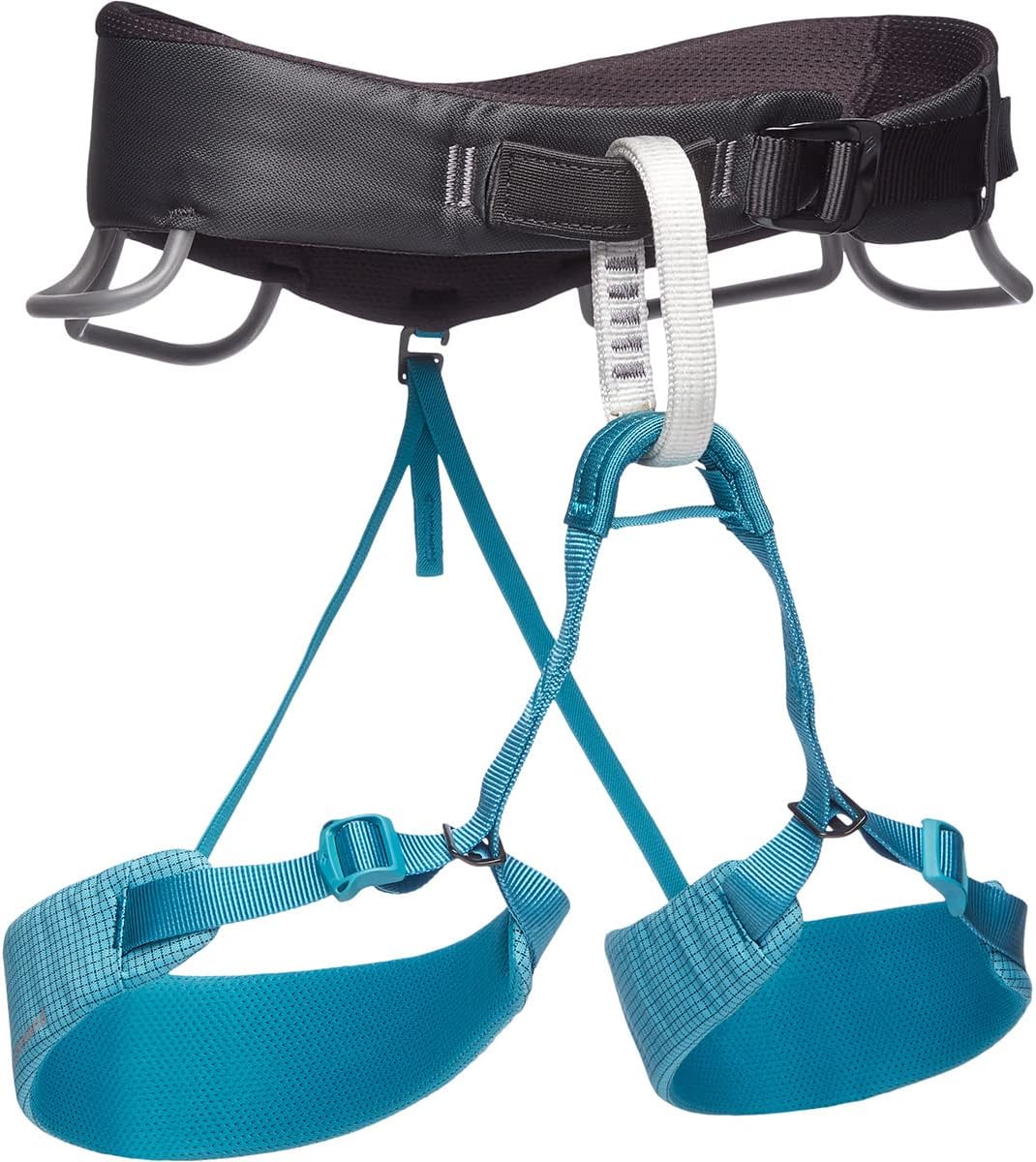
<p>A climbing harness is the piece of body equipment that connects a climber to the rope. It wraps around the waist and thighs, attaches to the rope at a single hard point in the front, and is what makes climbing with a partner safe — if the climber slips, the harness is what catches them. Every climber who climbs anything taller than a bouldering wall owns one.</p><p>The Black Diamond Momentum is one of the most common harnesses in the sport. It's what most climbing gyms hand out at their rental counter, and it's what most climbers buy first when they're ready to own their own. This is the women's-specific version: the waistbelt sits a little higher and the leg loops are tapered for a more comfortable fit than the unisex Momentum.</p><p>Black Diamond is one of the two or three brand names every climber recognizes — they make gear that's actually trusted on real walls. Dual-core construction spreads pressure evenly so the harness stays comfortable on long routes. A Speed Adjust waistbelt buckle makes putting it on a five-second affair instead of a fumble. Four gear loops give a place to clip carabiners and other climbing tools. Works equally well in a gym, on an outdoor sport route, or on a longer multi-pitch climb.</p><p>One important note for a gift: this is a fit-sensitive item. Sizes run XS through LG, by waist measurement (XS: 26-29", SM: 28-31", MD: 30-33", LG: 33-36"). If you don't know what size to grab, this is a gift to either coordinate on quietly or to give as a card-and-link combo. For a climber who's just getting started, or whose old harness is starting to fray and needs replacing, it's an excellent, well-respected pick. Starts at $58.88.</p>
View On Amazon(paid link)
Men's Momentum Harness
Black Diamond
Men's Momentum Harness
<p>A climbing harness is the body equipment that connects a climber to the rope. It loops around the waist and thighs, attaches to the rope at a single hard point in the front, and is the difference between "fall and get caught" and "fall and don't get caught." Every climber who climbs anything taller than a bouldering wall owns one.</p><p>The Black Diamond Momentum is the standard. It's the harness most climbing gyms hand out at the rental counter, the one most new climbers buy first, and the one plenty of experienced climbers stick with for gym days and casual outdoor sessions because it just works. This is the men's cut, with a longer rise and different leg-loop geometry than the women's Momentum.</p><p>Black Diamond is one of the brand names every climber recognizes — they've been making climbing equipment since the late 70s and they're trusted on everything from local crags to Himalayan peaks. The Momentum's dual-core construction spreads pressure evenly across the waistbelt so it stays comfortable on long routes. A Speed Adjust waistbelt buckle gets it on in seconds. Four pressure-molded gear loops give the climber a place to clip carabiners, quickdraws, and other tools they'll need on a route. Works in the gym, on outdoor sport routes, and on most multi-pitch climbs.</p><p>Important: this is a fit-sensitive item. Sizes run XS through XXL, by waist measurement (XS: 24-27", SM: 27-30", MD: 30-33", LG: 33-36", XL: 36-39", XXL: 40-45"). If you don't know what size to grab, this is one to either coordinate on quietly or give as a card-and-link combo so they can pick their own size. Otherwise, an excellent and well-respected pick — solid for someone just getting into climbing or replacing an aging harness. Starts at $68.88.</p>
View On Amazon(paid link)
Portable Hangboard
masilas
Portable Hangboard
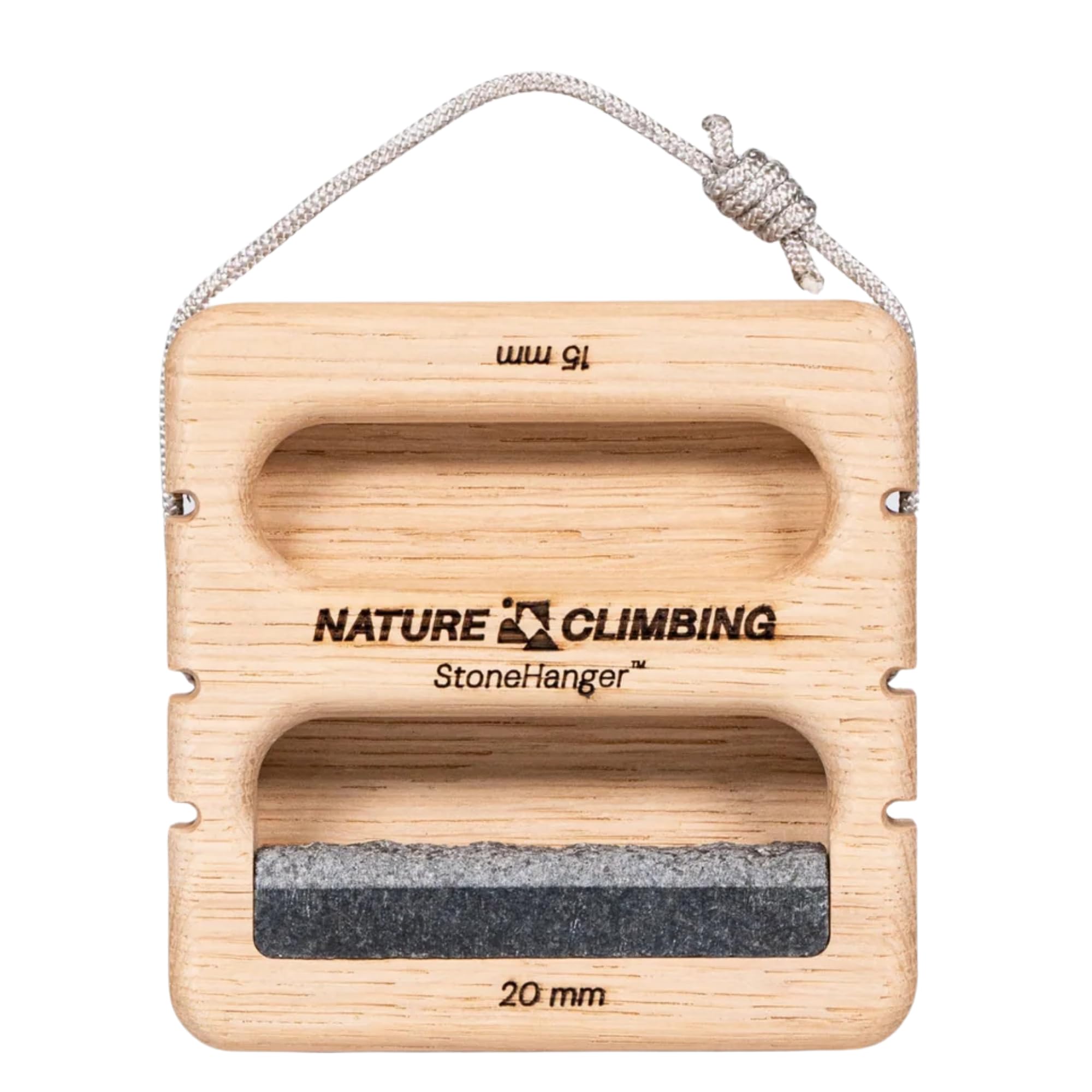
<p>A hangboard (sometimes called a fingerboard) is a piece of wood or plastic with a series of small edges, holes, and pockets carved into it. Climbers hang from those edges with their fingertips to build the very specific kind of finger and tendon strength that climbing demands. Pull-up bars build big-muscle strength; hangboards build the gripping strength that lets a climber stick to a tiny edge halfway up a wall.</p><p>This is the portable version of the format. Most hangboards are big slabs you mount to a doorframe or above a doorway, which is great if you have a permanent training spot — and inconvenient if you don't. This one is a small hardwood block, about 290 grams, that can be hung from a rope, clipped onto a pull-up bar, or just held in the hand for some grip exercises. Throw it in a suitcase, take it to the office, hang it in a closet. Fourteen different grip positions ranging from forgiving 20mm edges down to advanced 6mm crimps mean it has room to grow with the climber as their strength improves.</p><p>One small caveat worth knowing as the gift-giver: hangboarding is something climbers usually wait to start until they have at least six months to a year of climbing under their belt — fingers and tendons need time to adapt to the load before specific finger training is safe. For someone past that point, though, this is a great training tool, and the portability is genuinely useful in a way most hangboards aren't.</p><p>Solid pick for any climber who's past the beginner stage and wants to put in serious work outside the gym. Compact, durable, well-priced. Starts at $29.90.</p>
View On Amazon(paid link)
Simulator 3D Training Board
Metolius
Simulator 3D Training Board
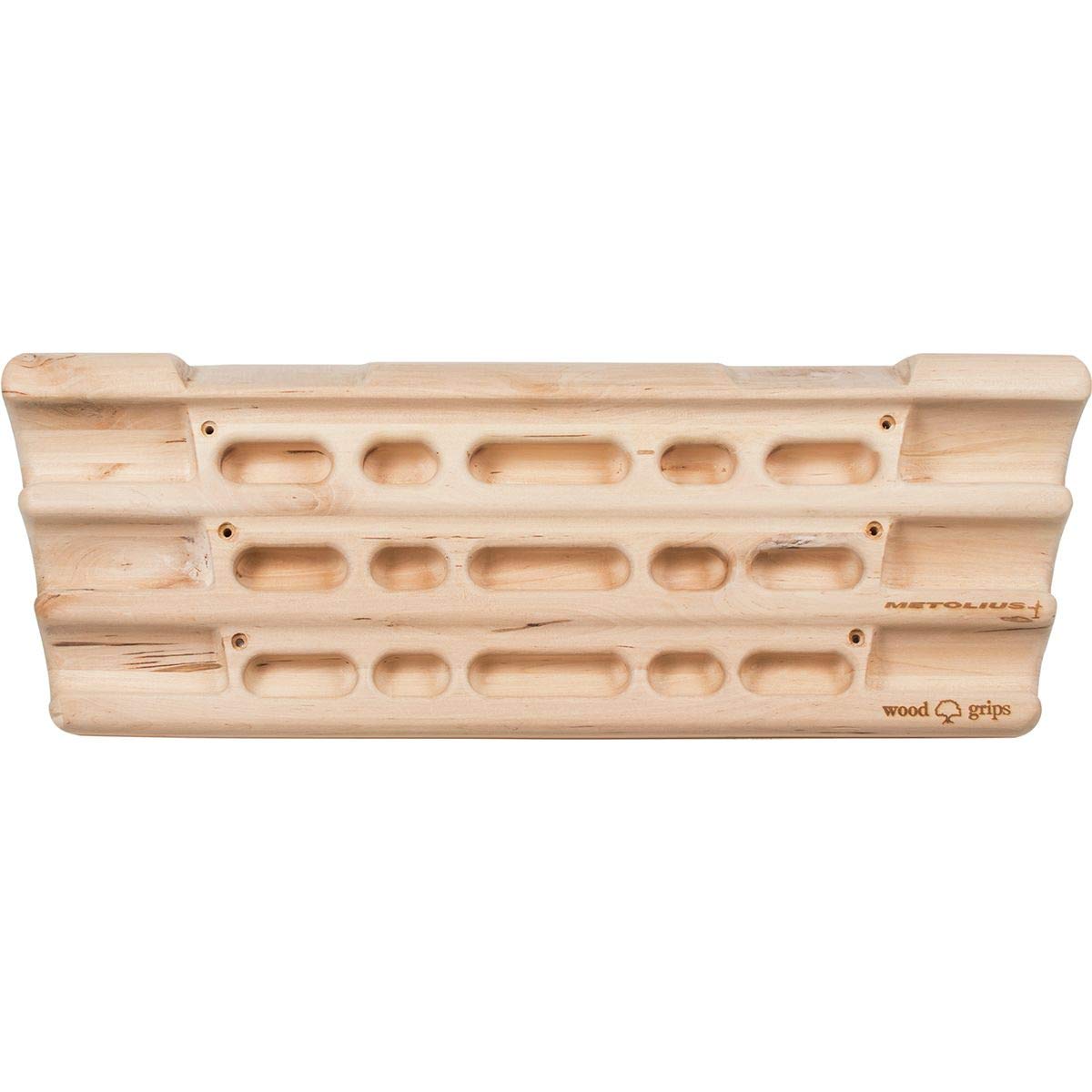
<p>If you've ever walked through someone's basement, garage, or hallway and seen a flat textured slab of plastic mounted high up on the wall, you've seen a hangboard. The Metolius Simulator 3D is the original — it's been the most popular training board in the entire sport for decades, and it's the one a lot of serious climbers eventually mount in their own homes. About 28 inches wide and 9 inches tall, it bolts above a doorway or onto a piece of plywood and gives a climber a permanent place to train finger strength.</p><p>What makes it the standard pick: it has a massive variety of hold types built into one piece — big jugs for warming up and pull-ups, rounded holds for open-hand strength, mid-depth edges for everyday training, and progressively smaller pockets for the climber's harder days. The holds are arranged along a wide arc that curves outward and downward, which puts the shoulders and arms in better positions and reduces injury risk compared to older flat-board designs. The texture is fine-grained and easy on the skin, so it doesn't shred fingertips even on long sessions. It ships with mounting hardware and a training guide.</p><p>Same gift-giver caveat as any hangboard: this is a tool for climbers who've been at it for at least six months to a year. Fingers and tendons need time to adapt before specific finger training is a good idea. For anyone past that point, though, this is the gold standard.</p><p>Metolius is one of the most respected climbing-specific brands out there — if a climber unwraps this, they'll recognize it immediately. Excellent gift for an intermediate or advanced climber who's building out a home training setup. Starts at $112.81.</p>
View On Amazon(paid link)
Digital Grip Strength Tester
Handexer
Digital Grip Strength Tester
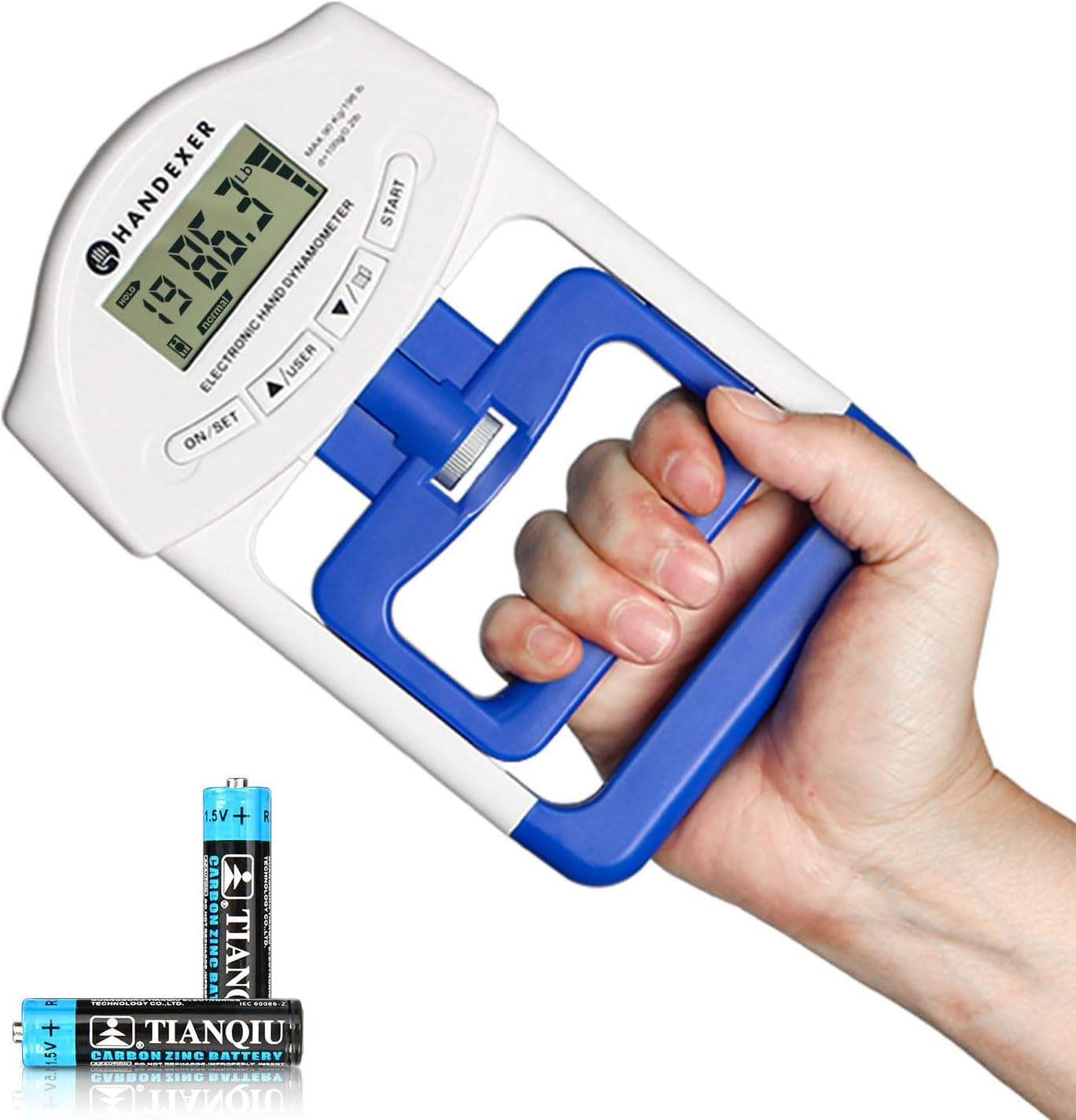
<p>A grip dynamometer is a small handheld device that measures how hard you can squeeze. You grab it, crush it, and a digital display tells you exactly how many pounds of force you just generated. For most people that number is a curiosity. For climbers, it's a metric — grip strength is one of the clearest predictors of climbing performance, and tracking it over time is one of the simplest ways to know if a training program is actually working.</p><p>The Handexer Digital Grip Strength Tester does exactly that, with a backlit LCD that shows the value in pounds or kilograms and stores up to 19 separate user profiles. A climber can track their own progress over months, compare their dominant and non-dominant hands (climbers care a lot about asymmetry — it's a common training focus), and benchmark against a partner or a training buddy. It measures up to 265 pounds, which is well above what virtually any climber will ever produce, so there's no ceiling to worry about.</p><p>The other thing worth knowing as a gift-giver: climbers genuinely love these. Grip-strength comparisons are a running joke at most climbing gyms, and most climbers have at some point tried to crush one of these at a doctor's office and come away weirdly proud of the number. Giving one as a gift means the recipient is going to test themselves immediately, and then test everyone else in the room.</p><p>Good pick for a climber at any level — beginners curious about their baseline, intermediates tracking gains, advanced climbers digging into specific weaknesses. Compact, well-priced, slightly addictive. Starts at $25.99.</p>
View On Amazon(paid link)
Boulder Beast XL Tri-Fold Crash Pad
Meister
Boulder Beast XL Tri-Fold Crash Pad
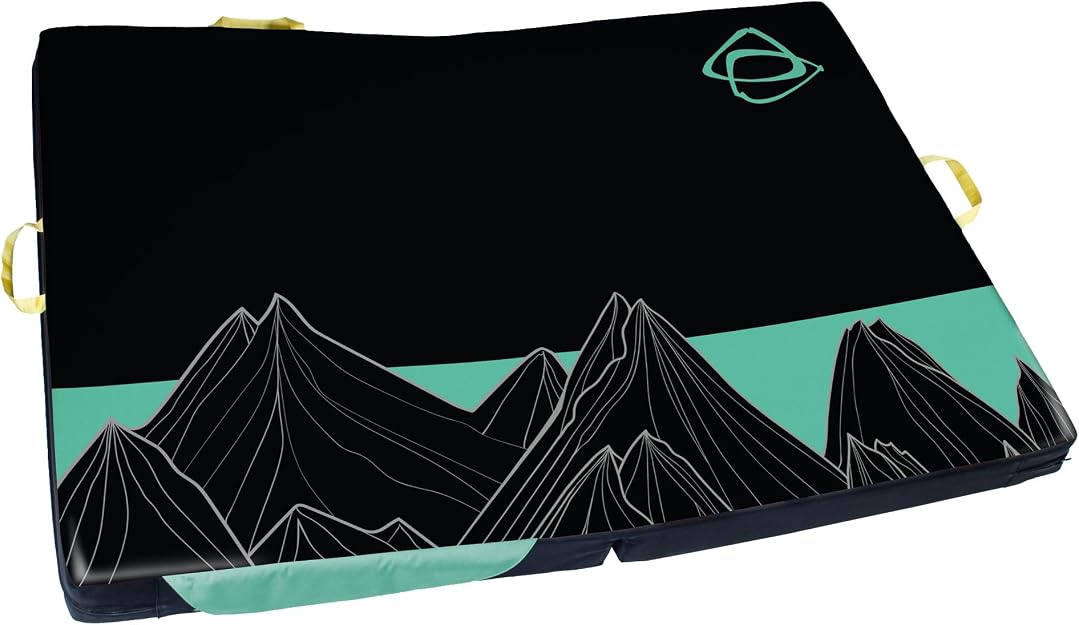
<p>If your climber boulders outdoors — that's the type of climbing where they're hurling themselves at short rock walls without a rope, usually 10 to 20 feet off the ground — they need crash pads. The pad is the only thing standing between them and a broken ankle when they come off a problem. Most outdoor boulderers own at least one, and serious ones own three or four to spread across a landing zone.</p><p>The Meister Boulder Beast XL is on the larger end of the format. Open, it's 72" by 44" — about the surface area of a queen mattress — with five inches of layered open and closed-cell foam. That foam stack is what determines whether a fall feels like a normal step down or a controlled crash, and five inches with the right layering is solidly in "real fall protection" territory. The cover is reinforced all-weather polyester, built for years of being dragged across desert grit and forest floors.</p><p>It's tri-fold, which means a smaller folded footprint and easier transport on uneven terrain. Removable backpack straps with a waist belt and chest strap let one person carry it to the boulders. Hook-and-loop flaps along the sides connect this pad to other pads, so a group can build a continuous landing zone across a problem. There are gear loops along the edges for clipping shoes, water bottles, and climbing tools, plus a small carpet square in one corner for cleaning chalk and dirt off shoe rubber before each attempt.</p><p>Important: this is a major gift. At $349 it's a real investment, and it's only useful for someone who climbs outdoors — gym bouldering walls already have built-in matting on the floor, so a pad gets no use indoors. But for someone who's started going outside, or owns one pad and could really use a second, this is a serious upgrade. Doubles as a camp mattress on overnight trips, too. Starts at $349.00.</p>
View On Amazon(paid link)